Routing instead of single-vendor dependence — VizMaker’s new AI engine
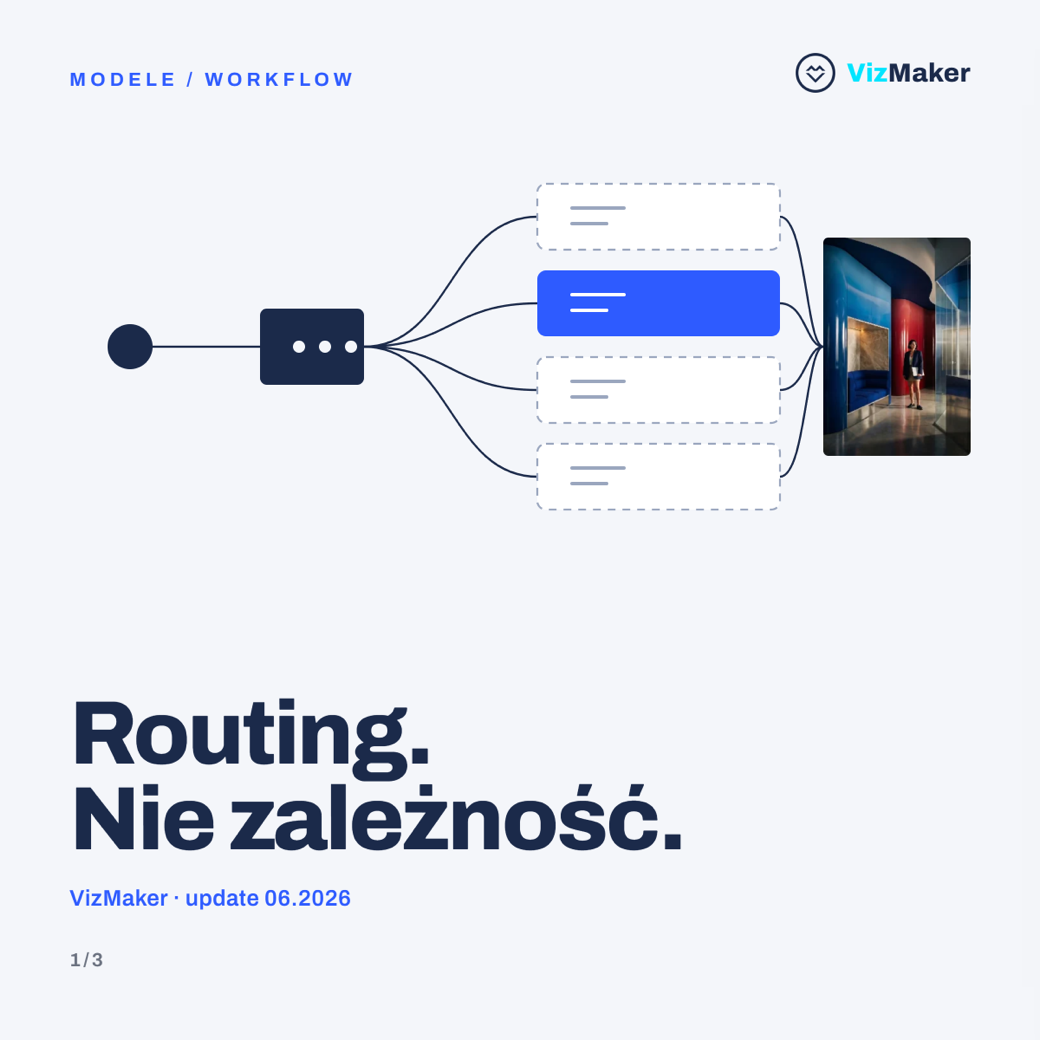
Following the Sora app wind-down, VizMaker is betting on a model-agnostic layer: it selects the best model for a given task and lets it be swapped without rewriting the workflow. This is an architectural decision, not another 'new model'.
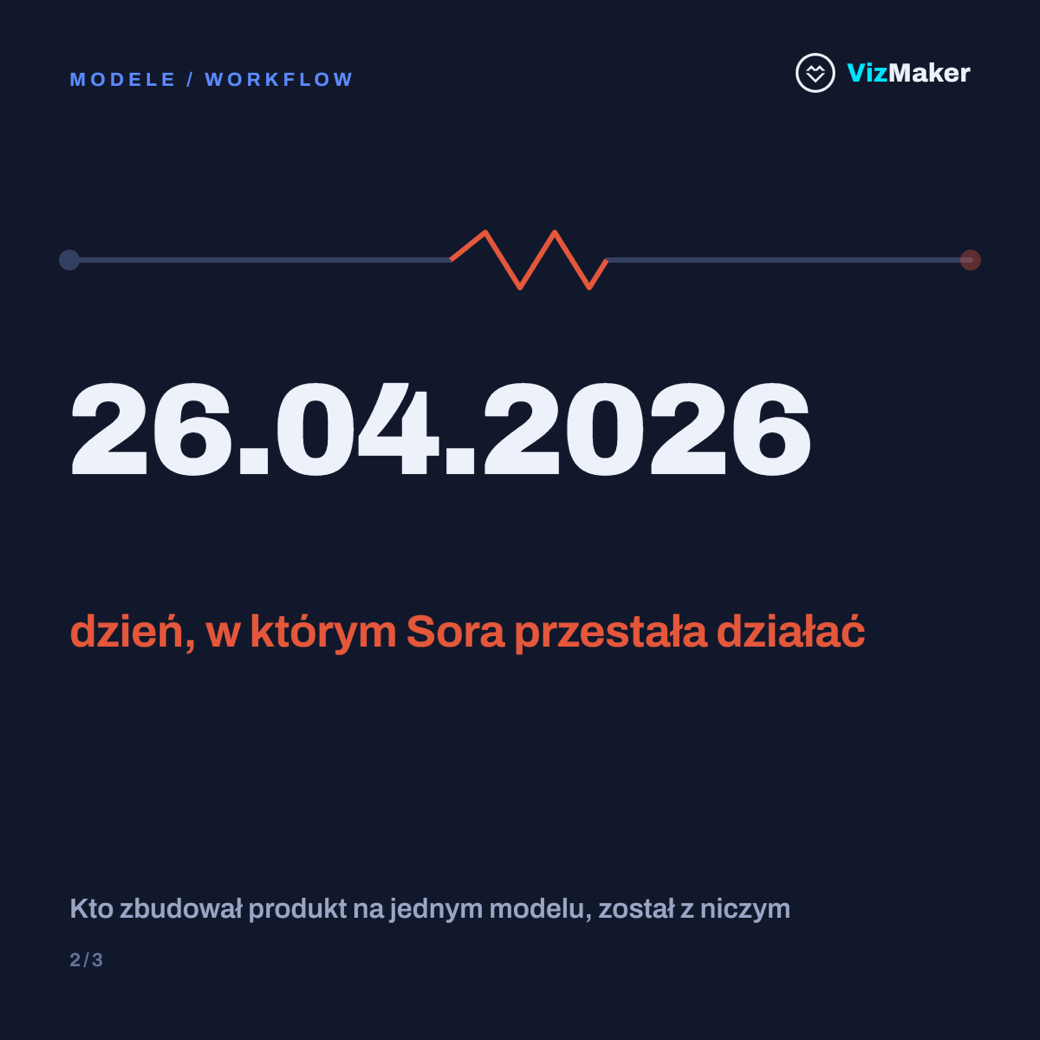
On 26 April 2026 the Sora app stopped working. Anyone who had built a product or process on that single model was left with nothing overnight. VizMaker's latest update answers this lesson directly and structurally: it doesn't bet on one model, but on a layer that selects the best one available. Routing instead of dependency.
The lesson of one shutdown
The Sora story is a ready-made cautionary case for the whole AI-powered creative industry. The app was shut down at the end of April 2026, with its API wind-down announced for September — tools that had staked everything on that single engine had a few months to rewrite their foundation or disappear. The problem runs wider than one company: the ranking of AI models reshuffles every few months, so locking a product permanently to one provider isn't convenience — it's a risk built into the architecture.
VizMaker's June update, then, isn't a 'new, better model'. It's a routing layer — a mechanism that sits between the user and the models, selects the best one available for a given task, and lets it be swapped out when the market shifts, without rebuilding the whole process. When a stronger model appears, it enters VizMaker as an option, not as a reason to rewrite the tool from scratch.
'Draft cheap, finish expensive'
Routing offers more than resilience against shutdowns, though — it offers work economics. VizMaker follows a simple rule: draft cheap, finish expensive. Cheap, fast models handle the iterations, while stronger, costlier ones come in only for the final frame. This mirrors how a visualisation actually gets made.
A visualisation goes through dozens of versions before the one the client sees emerges: a different angle, different light, different time of day, different arrangement. Paying the full, top rate for every one of those attempts is wasteful — and cutting corners on the final frame, the one the client actually pays for, is short-sighted. Routing lets you separate the two regimes: iterate cheaply, then finish at the highest quality, with no compromise where quality actually decides the reception.
The model changes, the process stays
This closes the loop on logic that began in January, when VizMaker launched as a renderer plugged into the workflow. If the tool is meant to serve the design process, it can't be hostage to a single model provider — otherwise someone else's business decision (a shutdown, a pricing change, a limit) becomes a failure on the designer's side. The routing layer moves lasting value from the model to the process: models will change and expire, but the architect's workflow is meant to stay.
'VizMaker doesn't impose a single engine or a single way of working.' — Wojciech Jurkowski, co-founder of VizAcademy and VizMaker.
This piece concerns the VizMaker brand (VizAcademy) — part of the Method Group ecosystem. Partner / sponsored publication on Method Press. Dates and facts regarding the Sora app wind-down come from public announcements.